Column · @growthsignaljournal
Key Competitor Signals to Watch for Growth Planning in Charlotte
Understanding Competitive Gap Analysis for Business Growth
When you are planning growth, knowing what your competitors are doing is only half the battle. The real value lies in spotting what they are not doing well, or where they leave room for you to step in. That is the essence of competitive gap analysis. It is a structured way to look at the market, compare your position against others, and find opportunities that are hiding in plain sight. For a business operating in a city like Charlotte, where the market is active and diverse, this kind of analysis can make the difference between stalling and scaling.
Competitive gap analysis is not about copying what others do. It is about understanding the signals they send through their actions, and then deciding where you can offer something better, different, or more relevant. The signals matter because they reveal priorities, weaknesses, and blind spots. When you read those signals correctly, you can adjust your own strategy to capture the customers your competitors are missing.
The Most Important Competitor Signals
Not every move a competitor makes is worth your attention. Some signals are noise. Others are direct indicators of where the market is shifting. The signals that matter most for growth planning fall into a few clear categories. Each one tells you something specific about how the market is being served and where gaps exist.
Pricing Signals
Pricing is one of the loudest signals a competitor sends. It tells you how they value their own offering and what kind of customer they are after. A competitor who drops prices aggressively may be trying to buy market share, but that often comes at the cost of service quality or long-term sustainability. On the other hand, a competitor who raises prices without adding visible value may be losing touch with what customers are willing to pay for. By tracking pricing changes over time, you can spot where there is room to offer a better value proposition. Maybe you can deliver a similar product at a lower price, or justify a higher price with features or service they do not provide.
Service Gaps
Service gaps are often the most actionable signals. Look at what your competitors include in their standard offering and what they leave out. Do they offer fast delivery, extended hours, or personalized support? If not, those are gaps you can fill. Service gaps are particularly important in local markets like Charlotte, where convenience and reliability often matter as much as price. A competitor who does not answer the phone after 5 PM or takes three days to respond to inquiries is creating an opening for you to win customers who value quick, responsive service.
Search Visibility
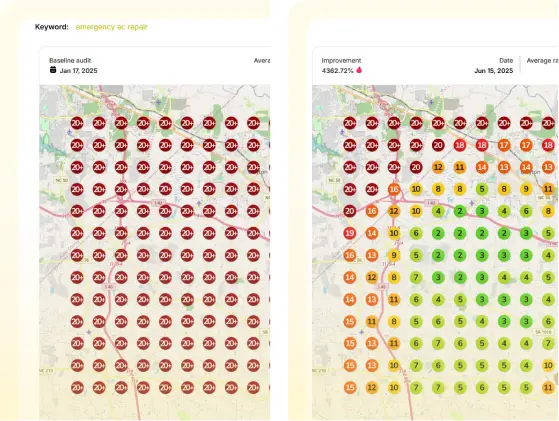
How visible are your competitors online? Search visibility is a signal of how well they are capturing demand. If a competitor ranks high for terms your customers use, they are likely getting a steady flow of new business. But if their content is thin, outdated, or poorly targeted, that is a gap. You can invest in content that answers the questions they ignore. Search visibility also reveals where they are not showing up. For example, if they dominate one keyword but have no presence in a related area, you can build authority there. Tools that track search rankings and organic traffic can give you a clear picture of where the competitive landscape is crowded and where it is open.
Customer Reviews
Customer reviews are a goldmine of signal data. They tell you exactly what people like and dislike about your competitors. Look for patterns in the complaints. Are customers unhappy with long wait times, poor communication, or a lack of certain features? Those complaints are your roadmap. If multiple reviews mention that a competitor's product breaks easily, you can emphasize durability. If people complain about confusing pricing, you can make your pricing transparent. Reviews also highlight what customers value most, which helps you prioritize your own improvements.
Feature Comparison
Feature comparison is about looking at the specific capabilities of competing products or services. What does each one include as standard? What is an upsell or a premium add-on? A competitor who charges extra for a feature that many customers consider essential is creating a gap. You can bundle that feature into your base offering and use it as a differentiator. Feature comparison also helps you avoid building things nobody wants. If a feature is widely available and rarely used, it is not a gap; it is a distraction.
How to Analyze the Signals
Collecting signals is the first step. The real work is in interpreting them together. A single signal in isolation can be misleading. A price drop might mean a competitor is clearing inventory, or it might mean they are struggling financially. A sudden surge in positive reviews might be genuine, or it might be a short-term campaign. The context matters. Look at signals over time and across multiple sources before drawing conclusions.
One practical approach is to create a simple matrix. List your main competitors down one side and the key signal categories across the top. For each cell, note what you observe. Then look for patterns. If two competitors both have weak search visibility and poor reviews on customer service, that is a gap you can exploit. If one competitor dominates pricing but has limited features, that suggests a segment of customers who want more than the basic option and are willing to pay for it.
Another useful technique is to map the market positioning of each competitor. Where do they sit on the spectrum from low-cost to premium, from basic to full-featured, from local to national? The gaps often sit in the spaces where no one is positioned. For example, if most competitors are either very cheap or very expensive, there may be a middle-ground opportunity that nobody is serving well.
For businesses looking to streamline this process, a platform like Web Rank Digital can help automate the collection and analysis of competitor signals. Their system is designed to detect real-time market gaps and provide actionable insights without requiring a manual research effort. That kind of tool can save time and reduce the risk of missing important shifts in the competitive landscape.
Turning Signals into Growth
Once you have identified the gaps that matter, the next step is to decide which ones to act on. Not every gap is worth pursuing. Some gaps exist because the opportunity is too small, or because the cost to fill them is higher than the return. Prioritize gaps that align with your strengths and your business model. If you are great at customer service, focus on gaps that let you shine there. If your strength is speed or efficiency, look for gaps where competitors are slow.
Growth planning also means thinking about timing. Some gaps are urgent. If a competitor just lost a major client or announced a service change that customers dislike, that is a window you can move into quickly. Other gaps are longer-term. They require building new capabilities or entering new segments. Both types matter, but they need different approaches.
Competitive gap analysis is not a one-time exercise. Markets change, competitors adapt, and customer expectations evolve. What was a gap six months ago might be closed today. Regular monitoring keeps your strategy sharp. Set a cadence for reviewing signals, maybe quarterly for major competitors and monthly for fast-moving categories. Over time, you will develop a feel for which signals are worth watching and which are just noise.
Putting It All Together
The goal of competitive gap analysis is not to outsmart everyone, but to find where you can deliver genuine value that others are missing. In a city like Charlotte, with its mix of established businesses and new entrants, the opportunities are there for those who look carefully. Pricing, service gaps, search visibility, customer reviews, and feature comparisons all offer clues. The skill is in reading them accurately and acting on the ones that fit your strategy.
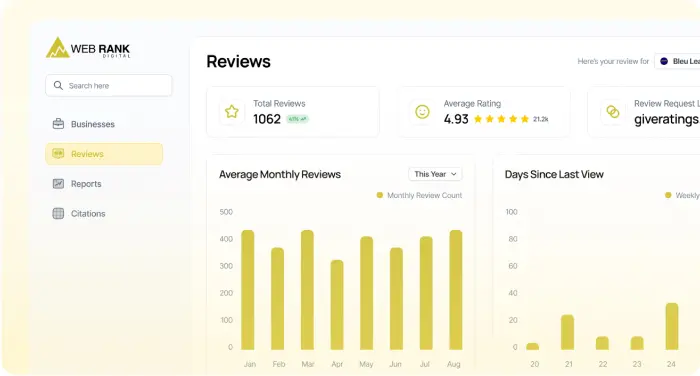
By staying focused on the signals that matter most, you can make growth decisions that are grounded in real market conditions rather than guesses. That is how you build a sustainable advantage. For businesses that want to take a more systematic approach, tools like Web Rank Digital provide a way to monitor these signals continuously and turn them into a clear growth plan.
If you are ready to apply these insights to your own business, consider reaching out to the team at Web Rank Digital. They are located at 401 S Graham St, Charlotte, NC 28202 and can be reached at +1 877-726-5871 to discuss how their platform supports market intelligence and competitor analysis.
Web Rank Digital is also on LinkedIn.